Tryst Link Journal
The hidden cost of free URL shorteners
Free URL shorteners can add trade-offs around analytics, longevity, control, and destination visibility. Here is what to check before relying on one.

A free URL shortener can feel almost invisible. Paste a long address, get a compact one, share it, move on.
The useful part is obvious. The trade-offs are easier to miss.
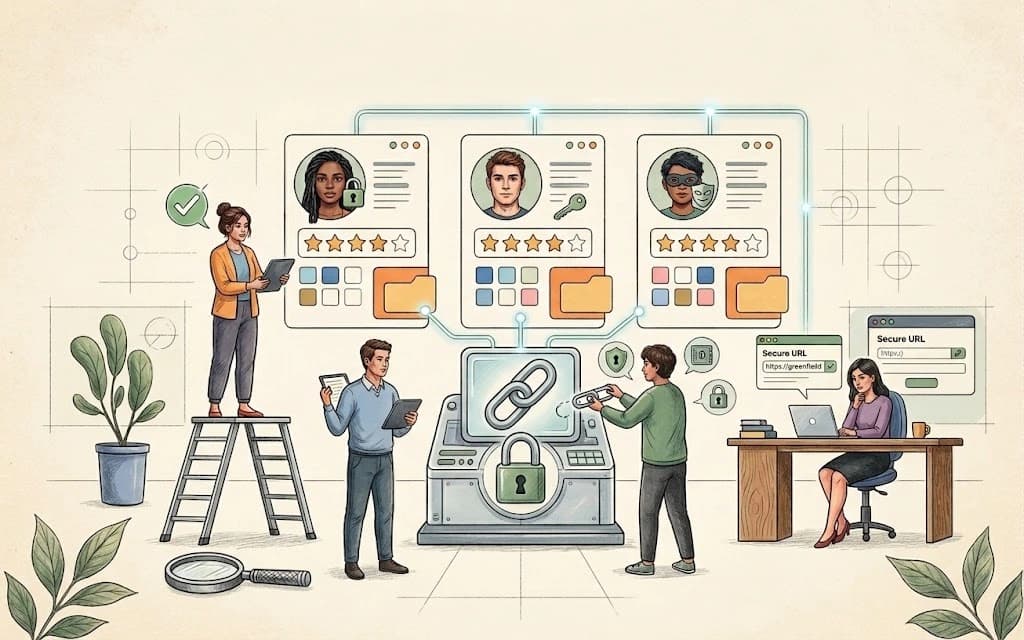
A short URL adds another service between the person clicking and the page they want to reach. That service has to receive the request, look up the destination, and issue the redirect. Depending on the provider, it may also measure link activity. And because the redirect depends on that provider, the short link only keeps working while the service, domain, account, and link remain available.
This is not an argument against URL shorteners. They solve real problems. It is an argument for knowing when the extra layer is worth it.
Aside
Correction, August 18, 2026: An earlier version of this article incorrectly stated that Google shut down all goo.gl links in 2025 and that billions of links were broken. Google changed its plan on August 1, 2025. Only goo.gl links that had already been showing a deactivation warning were targeted to stop working after August 25, 2025. Other goo.gl links were preserved. The unsupported "billions" claim has been removed. See Google's official update.
The trade-offs behind a short link
Click measurement
A URL shortener has to receive a request before it can redirect the browser. That position makes click measurement possible.
The important point is not that every shortener collects the same information. They do not. The important point is that you should check what the provider actually records.
For example, Bitly's current documentation describes link metrics including engagements, locations, referrers, and devices. Its privacy policy also states that it does not sell personal data or process personal data for targeted advertising as of the policy's latest update.
That is why blanket claims such as "free means your data is the product" are too crude to be useful. A service may fund a free tier through paid plans, enterprise subscriptions, usage limits, advertising elsewhere on the site, or another business model. Data practices need to be judged provider by provider.
The question to ask is narrower:
What information does this shortener collect when somebody follows my link, and what does it do with that information?
A privacy policy and analytics documentation should give you a better answer than the price tag alone.
Link longevity
A direct URL has one obvious dependency: the destination.
A shortened URL has at least two: the destination and the redirect service.
If the destination moves, the link can fail. If the shortening service changes policy, suspends the link, loses the domain, closes the account, or shuts down, the short URL can also fail even when the original page still exists.
Google's goo.gl history is a good example precisely because the story is more complicated than a simple shutdown.
Google stopped accepting new consumer goo.gl links in 2018 while saying existing links would continue to redirect. Years later, Google announced a plan to end support for existing links after August 25, 2025.
Then it changed course.
In an August 1, 2025 update, Google said it would preserve actively used links. The links targeted for deactivation were those that had shown no activity in late 2024 and had already been displaying a warning that they would stop working. Google said all other goo.gl links would continue to function.
That outcome is much less dramatic than "every goo.gl link died," but it still illustrates the structural point: when you use somebody else's redirect domain, the continued behavior of your link depends partly on decisions made by that operator.
For a temporary campaign, that may be perfectly acceptable. For a citation expected to survive for a decade, it deserves more thought.
Control over the redirect
A short link is not the destination. It is an instruction maintained by another system.
That distinction matters.
URL-shortening services need mechanisms to disable links used for phishing, malware, spam, impersonation, or other abuse. They may also suspend accounts or links that violate their terms. Those controls are necessary for operating a public redirect service, but they also mean the short URL is not completely under the publisher's control.
If the link is important to your business, documentation, packaging, or printed material, ask what happens if:
- the account is suspended;
- the service changes its acceptable-use rules;
- the shortener discontinues a feature;
- the short domain changes ownership;
- the destination needs to be updated;
- you need to move the links to another provider.
The more expensive it would be to replace the link later, the more valuable domain ownership and export options become.
Why shortened URLs deserve extra attention in unexpected messages
Short URLs improve readability by hiding a long destination behind a compact address. The same property can make it harder for a recipient to judge where the link leads before opening it.
That does not make short links malicious. It does make them useful for obfuscation.
The U.S. Cybersecurity and Infrastructure Security Agency lists untrusted shortened URLs as a phishing warning sign. CISA has also noted that attackers may use URL-shortening services to hide the true destination of a malicious link.
The practical response is not to avoid every short URL. It is to treat context as part of the security check.
A shortened link from a newsletter you deliberately subscribed to is different from one in an unexpected message demanding an urgent login or payment. If a message is suspicious, navigate to the organization's known website or app independently instead of trusting the shortened link.
What to check before choosing a URL shortener
Price is only one part of the decision.
Read the privacy documentation
Look for specific answers about link-event data. Does the service record IP addresses, location, referrer, browser or device information? How long is the data retained? Is it used only to provide analytics, or for other purposes?
Avoid assuming that all free services have one business model or that all paid services have another.
Check what happens to inactive links
Some services keep links indefinitely. Some attach limits to plans. Some allow expiry dates. Some reserve the right to remove inactive or abusive links.
If a URL needs to work years from now, make sure the provider's current policy matches that expectation.
Prefer a domain you control for important links
A branded short domain gives you one important advantage: you control the domain name.
You may still depend on software or a hosting provider, but owning the domain makes migration easier because the public address does not have to change when the backend changes.
For durable brand links, that is a stronger position than relying permanently on a shared third-party hostname.
Keep the original destination
A short URL should not become the only record of an important destination.
Keep the original URL in your documentation, source files, campaign records, or content management system. If the shortener disappears or the link is disabled, you still know where it was meant to go.
The alternatives are not all-or-nothing
Use a branded short domain. This is useful when the compact link itself matters and you want more control over its identity and migration path.
Use a third-party shortener with documented policies. A hosted service can save operational work. Compare its privacy practices, link-retention rules, abuse controls, export options, and pricing rather than judging it only by whether a free tier exists.
Do not shorten when there is no clear benefit. Many platforms already make long links manageable. If a direct URL is acceptable in the context, removing the redirect removes an extra dependency.
Encode the original URL in a QR code. For print and physical material, a QR code can point directly to the destination without requiring a short URL. Our QR generator creates the code locally in your browser.
A practical policy for links that need to last
There is no universal rule that every short link is bad or every direct link is better.
A useful decision process is:
- Shorten when compact presentation has a real benefit. Social profiles, spoken URLs, campaign material, and constrained layouts are obvious examples.
- Be cautious with long-lived citations. If the original URL is readable and stable, adding a third-party redirect may create more dependency than value.
- Use a domain you control for durable branded links. It gives you a better migration path if the software or provider changes.
- Keep source URLs somewhere you control. Never let the short-code database become the only record of where important links point.
- Check the service's current privacy and retention policies. Those details can change, so treat them as operational facts rather than permanent promises.
- Verify unfamiliar short links before entering credentials or making payments. The destination is hidden until the redirect is resolved.
The useful question is not whether free URL shorteners are secretly bad. It is whether the convenience of a short redirect is worth the additional dependency for the particular link you are creating.
Sometimes it clearly is. Sometimes the long URL is the better link.
Sources
- Google Developers Blog: Google URL Shortener links will no longer be available, updated August 1, 2025
- Google Developers Blog: Transitioning Google URL Shortener to Firebase Dynamic Links, 2018
- Bitly Support: What metrics are available in Bitly?
- Bitly Privacy Policy
- CISA: Recognize and Report Phishing
Further reading
The companion piece, How URL shorteners actually work, explains the redirect mechanism behind the service. If a QR code is a better fit for the job, the Tryst Link QR generator can encode the original URL directly in your browser.
Questions, answered
Frequently asked
- Are free URL shorteners actually free?
- They can be free to use without a monetary charge, but that does not mean there are no trade-offs. A shortener operates the redirect and may collect link-performance data such as clicks, locations, referrers, or device categories. Exact practices vary by provider, so check the service's privacy policy and product documentation rather than assuming every free shortener works the same way.
- What happened to Google goo.gl links in 2025?
- Google originally planned to discontinue support for all goo.gl URLs after August 25, 2025. On August 1, 2025, Google changed that plan to preserve actively used links. Only links that had already been showing a deactivation warning were targeted to stop working after August 25, while other goo.gl links were preserved.
- How can URL shortening contribute to link rot?
- A short URL adds another dependency. The destination can still exist while the short link fails because the shortening service, domain, account, or redirect policy changes. For links that need to survive for years, using a domain you control or publishing the original URL can reduce that extra dependency.